


Rice - The Grain of Life
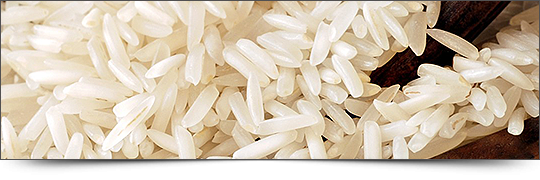
Rice (Oryza Sativa) is a member of the Oryzoid Group of the grass family, Gramineae. It is one of the world’s most valuable cereal grain. Its worldwide production is slightly above that of corn and a little less than that of wheat.
Roughly one half of the world population is wholly dependent on Rice as a staple food. It is grown on all continents of the globe, from latitude 50N in China to 35S in South America.
Rice Versatility
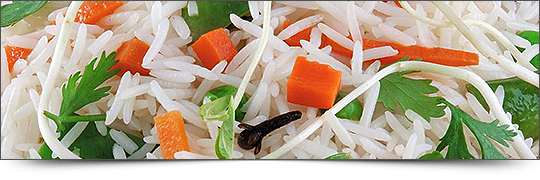
Rice is available cooked, uncooked, canned, dry or frozen. Probably no other food is offered in so many combinations. Its versatility in breakfast cereals, soups, salads, dinners, desserts and baby foods is unsurpassed.
Fans of rice cite its ease of preparation, its flexibility, and its ability to absorb flavors while retaining its texture. Rice dishes can be spicy or tangy, savory or sweet. Rice soaks up gravies and rice sauces and cools and refreshes the palate when served with spicy food.
It is used in a great variety of side dishes, main dishes and puddings featured in Oriental, Middle Eastern and many other cuisines. No feast is considered complete in the Sub-continent if rice is not included in the menu.
Basmati Rice
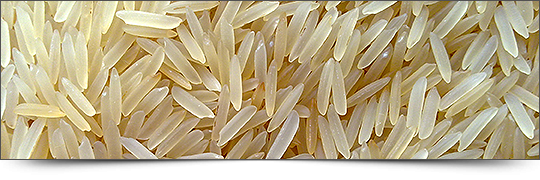
Of well over 7000 named varieties of rice, the most sought after variety is the Basmati Rice. “Basmati” means “the queen of fragrance” or “the perfumed one”. Basmati is famous around the world for its pleasant delicate taste, matchless aroma & longest grain with a smooth texture and, because of these special features, Basmati has won the hearts of the people worldwide.
Rice grows best, in river valleys, on deltas and on coastal plains, where temperatures are between 70F to 100F ( 21C - 38C). Punjab “the land of five rivers” is an ideal land for rice-growing. Fertile soil, suitable climate, naturally mineral enriched water, all these combine and the outcome is unrivaled unique Basmati Rice.
Rice Facts
Rice is one of the most important grains when it comes to human nutrition.
Rice is not only economical, but extremely versatile and very easy to prepare. It is ideal for any meal, no matter what time of day. A little bit of rice always goes long way, like parboiled long grain rice, which swells to three times its original size when cooked.
Energy (calories)
Rice is an excellent Low GI option where we can use this energy to grow, as well as to perform everyday physical activities.
Parboiled Rice, when served in moderate portions generally provide a slow release of energy, improve blood glucose control and may keep you feeling satisfied for longer.
Carbohydrates
Carbohydrate is fuel for our bodies. It is converted into glycogen, stored in our cells and released when we need it. Rice is a good source of carbohydrate, which is an essential part of a balanced diet.
Protein
Protein is the second largest component of rice. It has all eight of the essential amino acids, which are ultimately responsible for building muscle tissue, enzymes and antibodies, all of which make rice a high quality protein.
Vitamins & Minerals
Both white and brown rice contain essential vitamins and minerals, including the B-group vitamins, vitamin D, calcium, iron, zinc and phosphorus. Brown rice also contains Vitamin E, magnesium, potassium and manganese.
Fat
Rice is low in fat. It contains no harmful saturated fats and trans-fatty acids, so as part of a balanced diet, it is sure to help to keep cholesterol levels in check.
General
Rice contains negligible amounts of sodium, less than 5 mg sodium per 100 g serving. It is therefore a superb food for people who need to watch their salt intake.